
Where the Best Odds Are, and How to Actually Get Them
Look at one match at a bookmaker, an exchange, a sharp Asian bookmaker and a broker's platform and you get four prices. The biggest number is not always the one that pays most, and the price you see is not always the price you get at your stake.
In sports betting, the best odds are the highest price you are actually paid once the costs of the bet itself have come off, at the stake you want to place. Compare one outcome at one moment in decimal odds. On an exchange, take commission off first: 1 plus (odds minus 1) times (1 minus your rate). Then check that the price holds for your stake, compare across venue types, and look again before you bet. A bigger exchange number can pay less than a smaller one at a bookmaker that takes no cut from your winnings. Check the current terms, and remember that most bettors lose over time.
Why the biggest number is not always the best odds
Every venue charges you somewhere, and only some of it shows on the screen. A bookmaker keeps its cost inside the price, an exchange takes a share of what you win, a sharp Asian bookmaker builds in a margin it says is thin, and a broker adds fees of its own, mostly for moving money.
The other half is size: at a bookmaker the stake a price can take is a limit it sets, and on an exchange it is whatever other customers have put up. The guide to how stake ceilings work covers the first, and where a win can be capped covers payouts.
Betfair's own help says the odds are "generally higher" for singles on its Exchange than on its Sportsbook, a claim made before exchange commission. Treat it as a reason to compare, not as a result.
How to get the best odds, step by step
- One market, one moment.
Same match, same minute. Compare full-time result with full-time result, or a handicap line with the same line. For anything but a football result, check which sports and markets the exchanges carry first.
- Use decimal odds.
A decimal price includes your stake back: 2.44 returns £2.44 for every £1 staked. Convert fractional or American prices first, or you compare unlike things.
- Take exchange commission off.
A bookmaker's price already contains its cost. An exchange price does not: Betfair charges commission on your net winnings in a market, never on a market you lose. For one winning back bet, the price after exchange commission is 1 + (odds minus 1) × (1 minus the rate), with the rate as a fraction (worked example below).
- Check the price at your stake.
An exchange price is only as deep as the offers behind it: the unmatched part of your stake waits as an open offer until someone takes it or you cancel it (how the queue of offers works). A price you cannot place is decoration, and I would rather place my whole stake at a slightly smaller price than part of it at the best.
- Compare like with like across venue types.
Line the prices up after their costs, one selection at a time, which is the habit behind how professionals shop for a price. A broker's platform may already show the venue's fees inside the odds, so check before you deduct them twice.
- Look again before you bet.
Prices move and offers get taken, so last minute's leader may not lead now. A screenshot is not a price.
Lowest margin betting starts with measuring the margin
Step 3 prices one selection. In the tool, type the decimal odds of every outcome of one market and, if you like, an exchange commission rate (it opens at an example 2). It shows the prices as typed, a fair view with the margin removed, and a third slip that applies the step 3 sum to each price as a single bet. It gives no verdict on any venue. The tool's own page works through two examples.
A price after exchange commission, worked through
Invented prices for one home win: a retail bookmaker at 2.26, a sharp Asian bookmaker at 2.44, an exchange at 2.46 to back and a second exchange, reached through a broker's tool, at 2.48. Both exchange prices carry an example commission rate of 3% (check the current terms for your own).
The biggest number, 2.48, came second. It would need a rate below about 2.7% to beat 2.44 (1 minus 1.44 ÷ 1.48 = 0.027).
The screen shows the price before the bill.
Best odds betting sites: where each kind keeps its cost
A retail bookmaker: inside the price
You bet against the bookmaker: Betfair's own help says of its Sportsbook that "it is Betfair that set the prices and carry the risk". The cost is the margin in every price.
An exchange: other customers' offers, then commission
On Betfair Exchange the other side of your bet is another customer's offer. Its charge is exchange commission on net winnings, at a rate that depends on where you live and, in some regions, on your package. Every exchange sets its own, so check the current terms.
A sharp Asian bookmaker: a margin it calls thin, no exchange commission on a win
Pinnacle is the reference case, and its own article says that on a Premier League match-result example it runs a 2% margin against an industry average of 6%, with, unlike exchanges, no commission on winning bets. That is a claim about one market type, not a general fact. Its terms exclude many countries, the UK and the USA among them (check the current terms), and reserve the right to refuse or limit any bet. How the sharp Asian books are reached has a page of its own.
A broker: reach, plus its own layer
A broker reaches some venues that sell only through brokers and adds its own country list and fees, mostly for moving money; it removes none of a venue's rules. Its exchange tool is a commercial arrangement between broker and exchange, so the rate is the broker's own statement. MadMarket's page says a flat 3% on winning bets for its Sharp Exchange. Sportmarket says it "does not charge any additional commissions" and that "all bookmaker and exchange fees are integrated into the odds displayed"; FairExchange, a separate account, has its own 3% (check the current terms).
BetInAsia, MadMarket and Sportmarket exclude the UK and the USA in their terms, AsianConnect keeps a restricted list of its own, and all four ask for ID checks before a withdrawal (check the current terms). I would not add a broker to save a fraction of a price: it earns its place by reaching a venue sold only through brokers, and the broker-by-broker breakdown of fees and countries shows which.
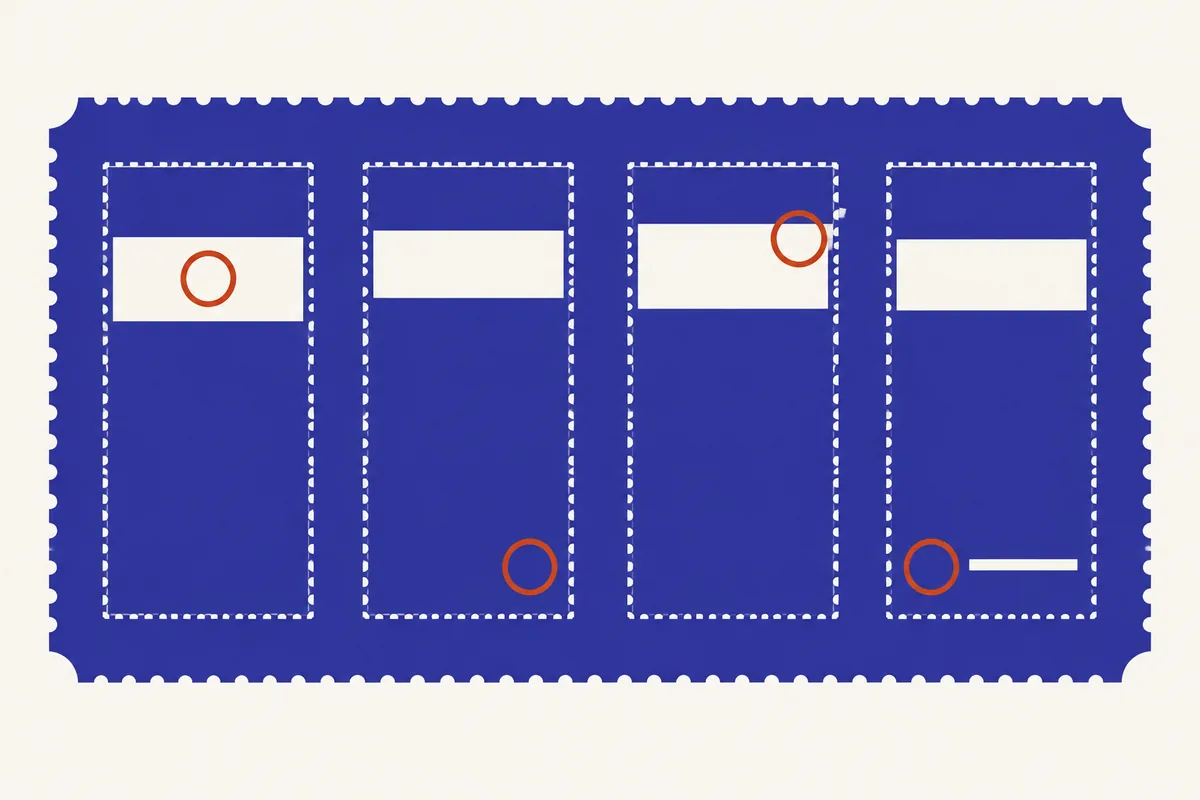
Four venues, four places for the cost
Read it row by row: it shows where each kind of venue keeps its cost, not how large the cost is.
Schematic, not to scale. No figures are implied.
A hypothetical: checking before you stake
Picture a bettor who has £350 for the home win. She checks each price and the room behind it, finds only part of £350 waiting at the exchange's 2.46, sees that after commission it pays less than the sharp bookmaker's 2.44, which has room for all of it, and stakes there: a win returns £63.00 more profit than at the retail bookmaker's 2.26.
If it loses, the £350 is gone.
When the price is right and the door is closed
If the exchange wins on price after commission but your account cannot reach it, the walk-through of ways into Betfair Exchange covers the routes.