
Betfair Trading: Buying Low, Selling High on a Football Match
You never have to wait for the final whistle. The moment the price on your side moves, you can close out, in part or in full, and walk away with a locked number instead of a maybe.
Betfair trading means opening a bet at one price and closing part or all of it at a different price before the result is known, locking in a profit or a loss whatever happens next. A price moves because something in the match changes: a goal, a red card, a shift in the money sitting on one side of the ladder. Back a side, watch the price shorten in your favour, then lay the same side back at the new price; get the proportion right and both outcomes pay out the same. Exchange commission still applies to whatever ends up as net winnings on that market, whichever leg looks like the winner on paper. This changes the risk sitting inside a single bet. It does not remove it: the price can move against you first, and most bettors, trading or not, lose money over time.
What trading on the exchange actually means
Betfair's help pages describe trading as "having more than one bet in a market; seeking to improve your position or lock in a profit on all possible outcomes." Strip the phrasing back and it is buying a result cheap and selling it back dear before the final whistle. This sits inside the wider set of methods this site's pro-betting pages walk through, and it is one of the few that never needs the match to finish before it pays out.
A single back bet has two states: it wins, or it loses. A traded position adds a third: step out early, at whatever price the market offers, and lock a number that no longer depends on the final score. Miss that step and you are just holding a normal bet with extra work.
If you have never placed a bet on the exchange at all, the difference between a back and a lay is worth reading first; that groundwork lives on the page about placing your first bet on Betfair Exchange. What follows assumes you already know a back wins if the selection wins and a lay wins if it does not.
Getting matched at the price you want, before or after a goal, depends on how much money sits on the other side of the ladder at that moment, a separate question with its own full treatment on the page about market depth on Betfair Exchange, not repeated here.
A worked example: backing at 3.40, laying off at 2.10
Say you back Team A pre-kick-off with a £50 stake at 3.40. Fourteen minutes in, Team A scores. Backing Team A now costs 2.10 instead of 3.40, because the coin toss from ninety seconds ago now looks like the favourite. Nothing about your original bet changed. The price around it moved a long way.
Three choices sit open from here, not two. Do nothing and let the £50 ride to the final whistle. Lay off the whole position at 2.10 and walk away with one fixed number regardless of the result. Or lay off a fraction in between, trading some of the upside for some certainty. The table below works the first two in full.
| Leg | Stake / liability | If Team A wins | If Team A doesn't win |
|---|---|---|---|
| Back, pre-kick-off | £50.00 at 3.40 | +£120.00 | loses the £50.00 stake |
| Lay-off, after the goal | £80.95 at 2.10 | pays out £89.05 (the liability) | +£80.95 |
| Net, before commission | about +£30.95 | +£30.95 |
The lay stake is not a round number by accident. To level the two outcomes, divide the original return, £50 times 3.40, which is £170, by the new price: £170 divided by 2.10 is £80.9524, rounded to the nearest penny a bet slip will actually take, £80.95. Liability on that lay bet is the stake times the price minus one: £80.95 times 1.10 is £89.05. Do the sum both ways and the two outcomes land within a penny of each other, £30.95 one way and a hair either side of it the other, a rounding artefact, not an error in the method.
Here is the bit the headline leaves out. Exchange commission is charged on net winnings per market, not per bet and not by side, so it lands on that £30.95 regardless of which leg looks like the "winning" one. At the 2% Basic-package rate Betfair states for UK and Irish customers, that is 62p, leaving £30.33. At the 6.5% default rate most other countries pay with no discount earned yet, it is £2.01, leaving £28.94. Both are the operator's own published rates at the time this was checked; check the current terms, since these move.
Compare that with doing nothing. Let the full £50 ride and a Team A win eventually pays £120.00 before commission, £117.60 net at 2% or £112.20 net at 6.5%, more than either trading route above. Team A not winning after all, despite the early goal, loses the whole £50, with no commission on a losing market. That gap is the actual decision a trader makes.
Schematic, not to scale. No prices, odds or stake amounts are drawn, only the direction of the move.
Why the goal doesn't end the risk
The table above makes trading look tidy. It is tidy, once the lay bet has actually matched. Getting there is the part that goes wrong.
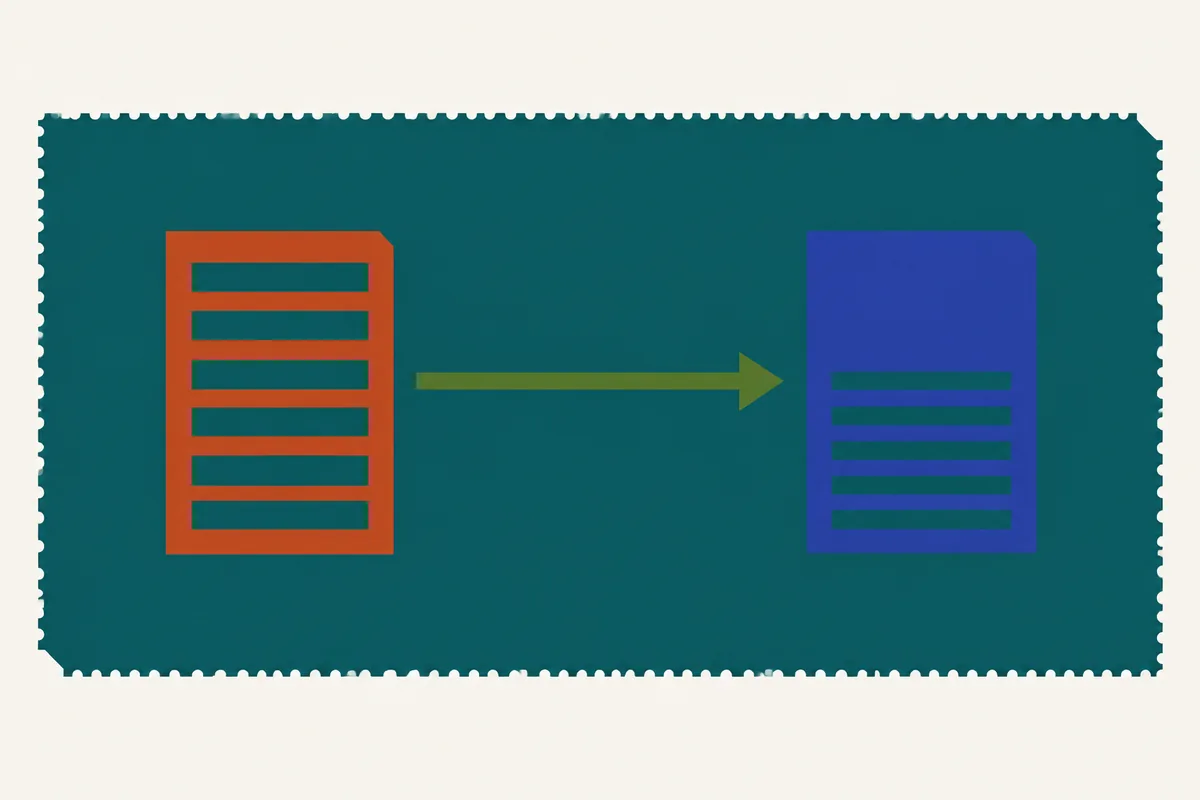
Betfair's rules say in-play markets carry a delay of between one and twelve seconds between your click and the moment it reaches the market. The gap exists so a customer with an unmatched offer resting on the ladder gets a moment to cancel it before a faster price catches it out, not to stop anyone acting. Tennis and baseball have already had that delay removed for passive bets left unfilled; football is still only being tested on the same change, so no football market has reached zero yet. That remaining gap is exactly when a red card, an injury or a VAR review can move the price again before your lay-off order even arrives, let alone matches.
Betfair also offers a one-tap Cash Out on some markets, placing the equivalent lay bet automatically. It isn't offered everywhere, a request can still be declined, and it can vanish from the screen in a thin market, often right when you want it most. Treat it as a shortcut for the arithmetic above, not a separate safety net.
Trading out without fumbling it
- Decide the exit price before kick-off, not during it.
Pick the move that would make you lock in, so the decision isn't made under a scoreboard.
- Work the lay stake out in advance.
Stake times original price, divided by the new price, is the green-up figure. Know the formula rather than reaching for it live.
- Place the lay-off, then check it matched, not just sent.
An order still unmatched in a moving market is not a locked position.
- Read the confirmed liability, not your own estimate.
Rounding and any late price move can shift the real figure from the one worked out beforehand.
- Write it down.
Whether the trade was worth the commission only shows over a run of them, not from any single one.
Placing this through a broker's exchange tool
Working the ladder like this needs somewhere to place both legs: a Betfair account, where the country allows one, or one of the four brokers this site covers, each selling its own branded tool onto Betfair's exchange rather than an account in your name. Prices and matching work the same way either route; what changes is the tool wrapped around them, its commission line, and its country list.
| Broker | Exchange tool | Commission on a winning market | Minimum stake |
|---|---|---|---|
| BetInAsia | Sharp Exchange | Not printed on the current pages; an archived version once said 2.5% | EUR 10 (archived figure) |
| AsianConnect | Piwi247 (the PIWIX exchange) | 3% | EUR 4 |
| MadMarket | Sharp Exchange | 3% flat, none on losing bets | EUR 10 |
| Sportmarket | FairExchange | 3%, only on winning bets | EUR 5 |
BetInAsia's Sharp Exchange doesn't print a current commission figure, only "lowest commission on the market" as marketing; check the current terms. Its restricted list still names the United Kingdom and the United States, not for you if either is home.
AsianConnect's Piwi247 opens PIWIX, a Betfair-powered exchange product, not a Betfair account in your name. Its help pages state plainly that horse racing has no lay side on PIWIX, ruling it out for anyone trading that sport as this page's football example does. Its own country list is inconsistent across pages, so check the current registration form rather than any list printed elsewhere.
MadMarket's Sharp Exchange states its flat rate plainly, the least ambiguous of the four. It excludes the United Kingdom, the United States and Australia by residency, a longer list than most of the others here.
Sportmarket's FairExchange cannot be used with API software bots, not for you if any part of this was going to be scripted. It also asks for a EUR 100 minimum deposit to activate the account, a steeper ticket than the other three, and excludes the United Kingdom, the United States and France.
None of the four gets you Betfair's liquidity pool directly. The Expert Fee, which can apply to Betfair's most profitable direct customers, belongs to that direct account structure instead; Betfair's Expert Fee page covers it in full.
What this isn't
Trading is not arbitrage, even though both involve more than one bet on the same event. Arbitrage locks a profit the moment every leg is placed, using prices that already disagree with each other; the arithmetic behind covering every outcome at once runs on a gap that exists before kick-off, not one that opens up during the match. Trading, the way this page uses the word, starts with a single bet and waits for the market to move.
None of this is football-only, either. In the minutes before a race goes off, horse racing markets on the exchange move at least as fast as a football ladder after a goal, sometimes faster, for the same reason: new information arrives and the price reacts to it before the result does.
Some traders stop watching the screen themselves and hand the ladder-watching to software instead; running a bot instead of watching the ladder yourself covers what Betfair's terms actually allow, since not every automated approach qualifies. Others build a sense of when a price is about to move from what it did last time; the price history behind every ladder move is its own page, for readers who want the data, not just the technique. Some broker platforms also ship dashboards for exactly this kind of in-play management; the built-in screens made for exactly this covers what they do and don't.
It also isn't a shortcut to becoming a professional bettor; knowing how to green up a position is one tool among many, and the fuller, less flattering picture of what doing any of this for a living actually requires is worth reading before treating one worked example as a career plan.
None of it removes the risk sitting inside the original bet. It just moves the decision earlier, to a moment you choose instead of one the final whistle chooses for you.
One goal changes the price. Nothing changes the commission.
Whichever of the four above ends up funding the exchange side of this, the full side-by-side of what each broker charges and excludes is worth reading before committing to one for the long run, not just for a single trade.