
Back and Lay Betting, Explained With Real Numbers
Backing is the bet you already know: pick a result, risk a stake. Laying puts you behind the counter for one bet, paying out if the result lands, and it feels backwards until you see who is holding the ticket.
Backing bets that a result happens: you risk your stake to win stake × (odds - 1). Laying says the opposite, that the result will not happen, so for that one bet you stand where a bookmaker stands and another customer holds the ticket. If the result fails, the backer's stake is yours; if it lands, you pay stake × (odds - 1), the liability. Lay £14 at 11.00 (an invented price) and you win £14 or lose £140. Betfair charges exchange commission on what you net across a market rather than bet by bet, at a rate set by your account and region.
What backing and laying each say about a result
Every exchange bet has two ends. A backer says a result will happen. A layer says it will not, and agrees to pay if the backer is right. Same market, same price; what differs is which side of the argument your money sits on.
At a bookmaker the layer is always the bookmaker, and it can scale back your stake. On an exchange the job goes to any customer willing to do it at the price on the screen, and that customer can be you. Betfair describes itself as the facilitator between two customers, not the party on the other side, and its terms list a few exceptions. Where that sits among the other ways to bet is in the exchange section's overview, so this page stays with the bet itself.
| On each bet | Back | Lay |
|---|---|---|
| What you are saying | This result will happen | This result will not happen |
| What you put up | Your stake | Your liability, stake × (odds - 1), owed if the result lands |
| What you can win | Stake × (odds - 1) | The stake you lay |
| What you can lose | Your stake | The liability |
| Who sits opposite you | A layer, another customer | A backer, another customer |
| What exchange commission comes off | Net winnings in the market | Net winnings in the market |
Read one column, then the other. What one side can win is exactly what the other can lose.
Stake against liability: where the risk hides
Take Northgate, an invented side, at 1.60 to win, and lay £35. Assume this is your only bet in the market. The liability is the most you can lose: £35 × (1.60 - 1) = £21.00, paid if Northgate win. What you win is the £35, collected if they do not, and with an example 2% rate exchange commission takes £0.70 of it, leaving £34.30.
Now stretch the price. A £14 lay at 11.00 looks just as modest on the slip (right up to the moment 11.00 wins). The liability is £14 × (11.00 - 1) = £140.00, ten times the stake, risked to win £14. Turn it round and the backer on the other side risks £14 to win £140.00.
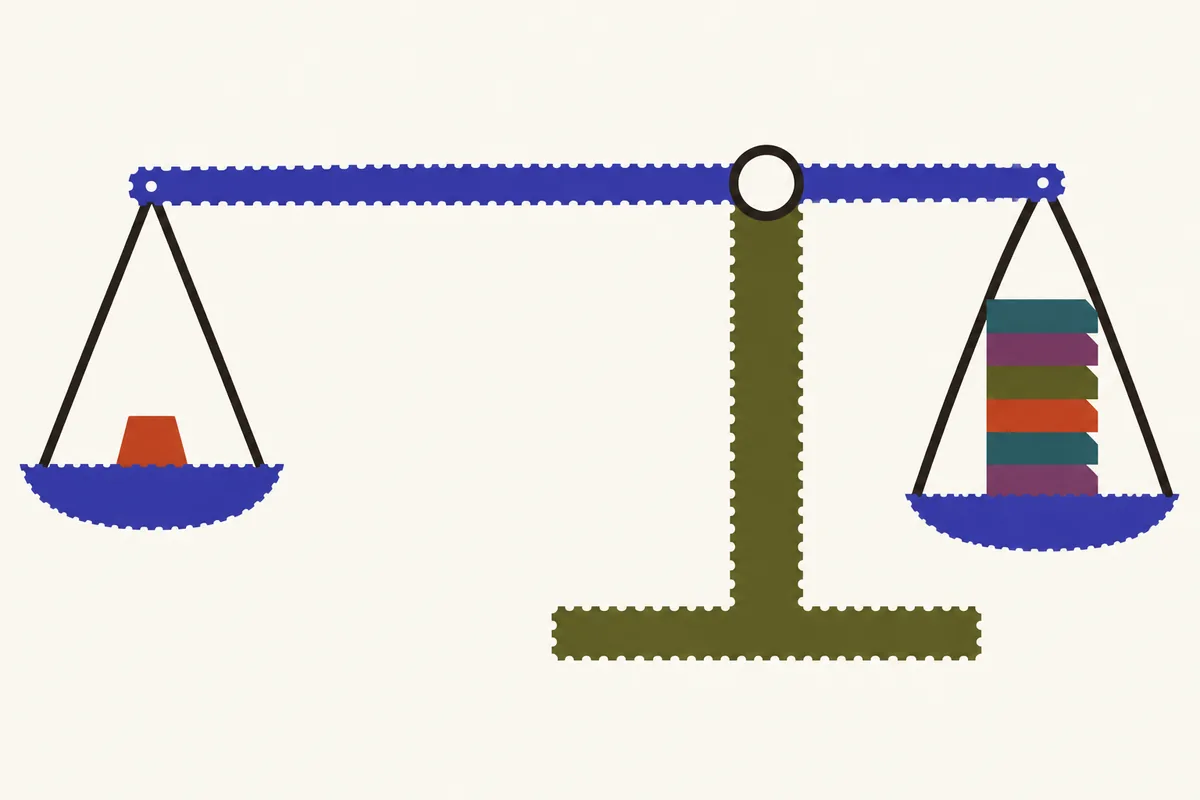
That is the asymmetry. A backer's loss stops at the stake whatever the price, and a layer's win stops at the stake whatever the price, but the layer's loss grows with the price. Short prices: gentle. Long prices: expensive.
A lay wins its stake and risks its liability.
Three ordinary jobs for a lay
Opposing a result you think is priced too short
You think Northgate at 1.60 is rated too highly. In a football match with three results, backing the other two takes two bets. One lay of Northgate covers both, because it wins on a draw or a Northgate defeat. That is the £35 lay above: £21.00 at risk to win £35.00. It says nothing about who wins, only that it will not be Northgate.
Backing first, then laying to even things out
Betfair's own help page defines trading as having more than one bet in a market, "seeking to improve your position or lock in a profit on all possible outcomes". The plainest version is a back bet followed by a lay on the same selection once the price has moved. The rule of thumb, in words: multiply the back stake by the back price, then divide by the lay price. The answer is the lay stake that leaves the two outcomes level.
Prices do not always move your way. If the price drifts out instead, the same rule leaves a small equal loss and no exchange commission is due. A position, not income.
Pricing a bet both ways
With both sides open, every price on the screen asks two questions. Would you back it here? Would you lay it here? Say your own number for a team is 5.20 (the price you think is fair, invented here, and possibly wrong). The screen shows 5.10 to back and 5.30 to lay. Backing at 5.10 pays less than your number, and laying at 5.30 has you risk £4.30 for every £1 you win when your number says £4.20. Nothing to do. Move the screen to 5.80 to back and you have one bet; move it to 4.70 to lay and you have the other.
Bookmaker prices carry a built-in margin, and what a bookmaker's cut looks like takes one short sum.
Run your own numbers
The calculator has two modes. 'Lay a selection' takes lay odds, lay stake and a rate, and returns the liability and what you win or lose. 'Back, then lay to even out' takes back stake, back odds, lay odds and a rate, with a lay stake of your own if you want one, and returns the equalising lay stake, the liability and the net result if the selection wins and if it loses. Exchange commission is charged on net winnings in the market, so it assumes these are your only bets there, and its rate box starts at an example 2% to replace with your own. For a slower read of each result, see the calculator's own page, with worked cases.
When a lay does not go to plan
A lay is a request, not a delivery. Four things get between the slip and the result.
It may not fill. Only the part of your lay that a backer takes is a bet, and the rest waits in the queue; for how that works, see the matching queue in detail.
The price moves. The even-out above worked because a lay at 5.40 was there to take. Nobody promised it. Until the second bet is matched, you hold one bet and a hope.
In-play, the clock runs differently. Betfair says in-play markets usually carry a delay of 1 to 12 seconds, a window for customers to cancel unmatched orders as conditions change, so check the current terms for your market. A thin market. A fast swing. A price that has already moved when your order lands.
Cash Out is not a safety net. It places the further bets for you, to lock in your position, and works per market, not per bet. Betfair says it is not offered on every exchange market, can be unavailable when a market is thin, and does not promise to accept a request.
What the account has to carry
Start with the balance. Betfair's terms (clause 18.16) set your maximum betting limit at whichever is smaller, your Available to Bet balance or your Exposure Limit. As we read it, a lay's liability is what has to fit, so hold that bigger number up against both.
Then comes the fee. Exchange commission is calculated on what you net across a market, so two bets on the same market are added together, and a market you finish behind costs nothing. The 2% on this page is the Basic package figure from Betfair's own worked example, not your rate; yours depends on your region and, in some regions, the package you pick, so check the current terms. Three example rates on one win are worked through in the hand-worked sums on the tools page.
A short check before you lay
Read these six lines once, before the first lay.
- The liability in pounds, at the price you will actually get. Not the stake.
- Both limits: your Available to Bet balance and your Exposure Limit.
- Depth: will the market fill the lay, or will half of it wait in the queue?
- Your only bet in the market? A second bet changes what exchange commission takes.
- In-play? The delay, and whether an unmatched offer lapses or stays.
- Whether you would still be comfortable if the liability went the wrong way.
If you have no account to lay from
All of this assumes a Betfair account you can log into. If you do not have one, getting an account to lay from is the step-by-step version. If Betfair will not open a direct account for you, the routes when a direct account is out set out what else is open.
Going through a broker means using its exchange tool on its terms, which is not the same as an account of your own at Betfair, and each broker has limits of its own.
BetInAsia's Sharp Exchange offered back and lay bets against other users on an older archived page, but its terms rule out residents of the UK and the USA. If you mean to lay horses, Piwi247's own FAQ says its exchange (sold through AsianConnect) has no lay betting on horse racing, and AsianConnect publishes an older restricted list, the USA and China on it, that its own sign-up form does not fully match. Check the current terms, and see who sells an exchange tool, and at what limit. Expect identity checks before any withdrawal on every route, and betting is for adults only.
Some people place orders by software instead of by hand, and the developer route for automated orders covers the keys and costs. It is a separate subject from this page.